Skip to product information
1 of 2

Pé na Terra

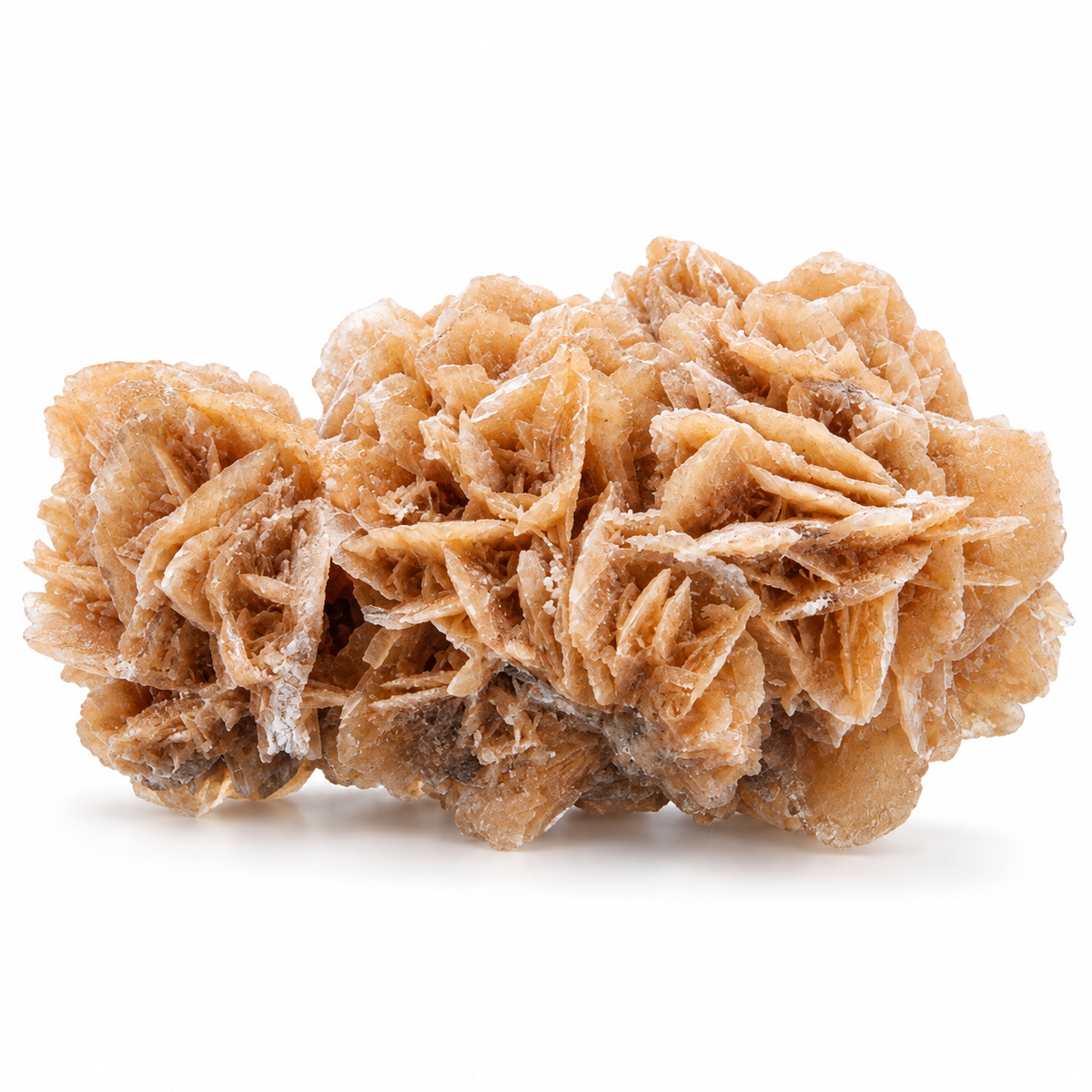
Natural Desert Rose

Natural Desert Rose

Referência: PBRD - 02

Regular price €15,00 EUR
Regular price Sale price €15,00 EUR
Sale Sold out
Taxes included.
Quantity

🤎 Desert Rose

A natural mineral formation known as the Desert Rose, appreciated for its shapes that resemble rose petals. Its crystal structures form rosette aggregates, generally in shades of beige, cream, golden, light brown, or grayish, making each specimen unique.

🔬 Scientific characteristics:

  • Mineral: Gypsum — variety known as Desert Rose
  • Chemical composition: CaSO₄·2H₂O
  • Mineral group: Sulfates
  • Crystal system: Monoclinic
  • Color: Beige, cream, white, golden, or light brown
  • Luster: Vitreous to pearly
  • Transparency: Translucent to opaque
  • Hardness: 2 Mohs
  • Density: approximately 2.3 g/cm³
  • Formation: Rosette-shaped crystal aggregates

The gypsum Desert Rose forms in arid environments, when groundwater or mineral-rich solutions evaporate and leave behind gypsum crystals that develop together with sand particles. The combination of crystals and grains of sand gives rise to its characteristic natural “petal” shapes.

✨ Holistic meaning

In holistic traditions and the traditional use of crystals, the Desert Rose is associated with clarity, protection, balance, inner strength, and connection with the earth. It is used symbolically for moments of introspection, meditation, and personal transformation.

Its rosette shape is traditionally interpreted as a symbol of rebirth, growth, and beauty that emerges even in arid environments, representing the ability to find balance and strength in the face of challenges.

🌿 Protection • Clarity • Balance • Inner Strength • Transformation

A natural and unique piece for decoration, collection, or meditation spaces, bringing the beauty of natural mineral formations into your environment. 🤎🌵

Energy and holistic associations belong to traditions and beliefs and do not constitute scientifically proven properties. The gypsum Desert Rose is a delicate mineral, with a hardness of only 2 Mohs, so it should be handled with care and protected from falls, scratches, and excessive moisture. Each specimen naturally varies in shape, size, color, and amount of sand.

View full details